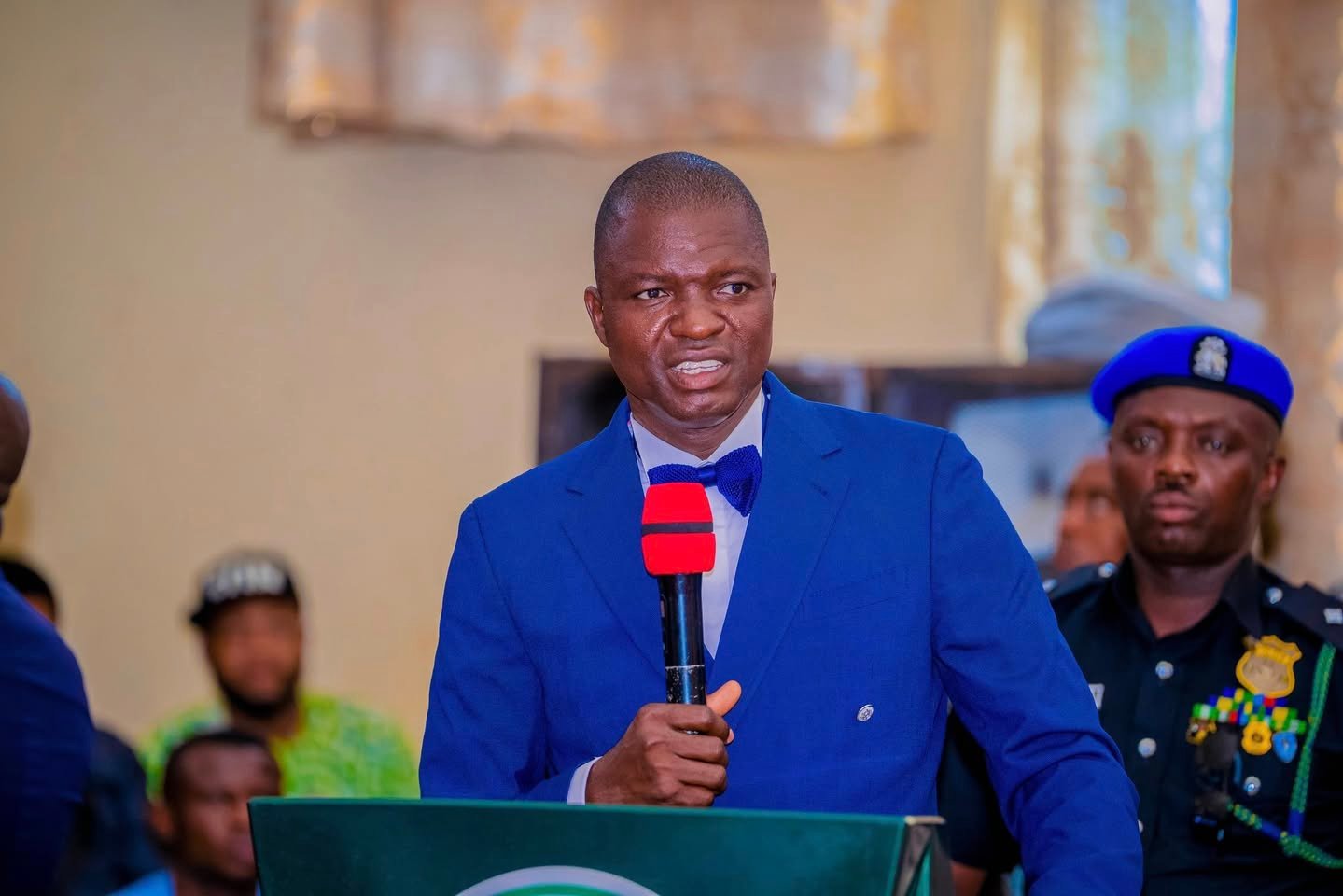
When people talk about Governor Francis Ogbonna Nwifuru’s education drive, the conversation often begins and ends with the overseas and national scholarships. Hundreds of Ebonyi youths are currently pursuing Master’s and PhD programmes in the United Kingdom and within Nigeria under full state sponsorship. These opportunities are life-changing, and they deserve celebration. But they are only one piece of a much larger design.
What Nwifuru is building goes far beyond sending bright young people abroad. He is deliberately positioning Ebonyi State to become an active participant in the fourth and fifth industrial revolutions by producing relevant manpower and creating the systems that will absorb and deploy that manpower.
Long before he became governor, Nwifuru, as Speaker of the Ebonyi State House of Assembly, played a central role in midwifing the Ebonyi State Health Insurance Agency (EBSHIA) into law. That legislative foundation has now become an executive priority. As governor, he has ensured consistent and sufficient funding for the agency. The results are visible: over 137,000 residents enrolled, thousands of civil servants and their families accessing care without catastrophic out-of-pocket costs, and growing public testimonials of lives saved and surgeries performed free or heavily subsidised. Health insurance is no longer a paper policy; it is a functioning safety net.

Beyond scholarships, the administration has established two specialised universities: the Ebonyi State University of ICT, Science and Technology at Oferekpe, and the University of Aeronautic Engineering. These institutions are not prestige projects. They are strategic bets on the knowledge economy. Universities of this nature do more than award degrees. They attract faculty, researchers, students, and support services. Businesses spring up around them, accommodation, food, transport, technology services, and light manufacturing. The host communities and surrounding local government areas stand to experience sustained economic activity. Over time, the cumulative effect is spatial development: new growth poles outside Abakaliki that help decongest the capital and spread opportunity more evenly across the state.
Nwifuru assumed office after eight years in which the civil service saw virtually no new employment or meaningful promotions. The resulting stagnation particularly weakened the education and health sectors, two areas that depend heavily on motivated, adequately staffed workforces. One of his earliest actions was to lift the employment ban. Recruitment has continued steadily. Teachers, health workers, and other civil servants have been engaged. Promotions that had been frozen for years were processed. Salaries and allowances have been improved, with newly employed doctors in general hospitals receiving packages of at least ₦500,000 monthly plus other incentives, including vehicles. These measures are restoring capacity and morale in the very sectors that shape human capital.

Everything fits into a coherent logic. Scholarships and specialised universities produce skilled people. Health insurance and better-funded public facilities keep those people healthy and productive. A revitalised civil service provides the administrative backbone to implement policy. Model secondary schools (dozens of 22-classroom blocks under construction across the 13 local governments) and improved basic education outcomes, Ebonyi’s rise into Nigeria’s top-three NECO performers, feed the pipeline of future university entrants.
The goal is clear: Ebonyi must not remain a passive consumer of technologies and ideas generated elsewhere. It must develop the human capital and institutional systems needed to participate in artificial intelligence, advanced manufacturing, aerospace-related activities, digital services, and other frontiers of the fourth and fifth industrial revolutions.
Many observers describe Nwifuru as the first truly indigenous governor of Ebonyi State in the sense that he instinctively understands the texture of local needs. He does not govern from a distance. The combination of legislative experience, grassroots rootedness, and a focus on human capital rather than solely on concrete has produced a distinctive style of leadership.
The overseas scholarships remain important and highly visible. But the deeper story is the quieter, more structural work: laws turned into funded programmes, universities sited for multiplier effects, a demoralised civil service being rebuilt, and a deliberate effort to prepare Ebonyi for an economy that rewards knowledge, skills, and adaptability.
That is the work that will determine whether the state merely survives the coming decades or actively shapes its place within them.